Good Morning friends and family!
I hope and pray your Christmas has gone well. That you all are safe and in good health. Hopefully you have been able to recharge your batteries and to reconnect with God as your busy family life has slowed down for a week or two.
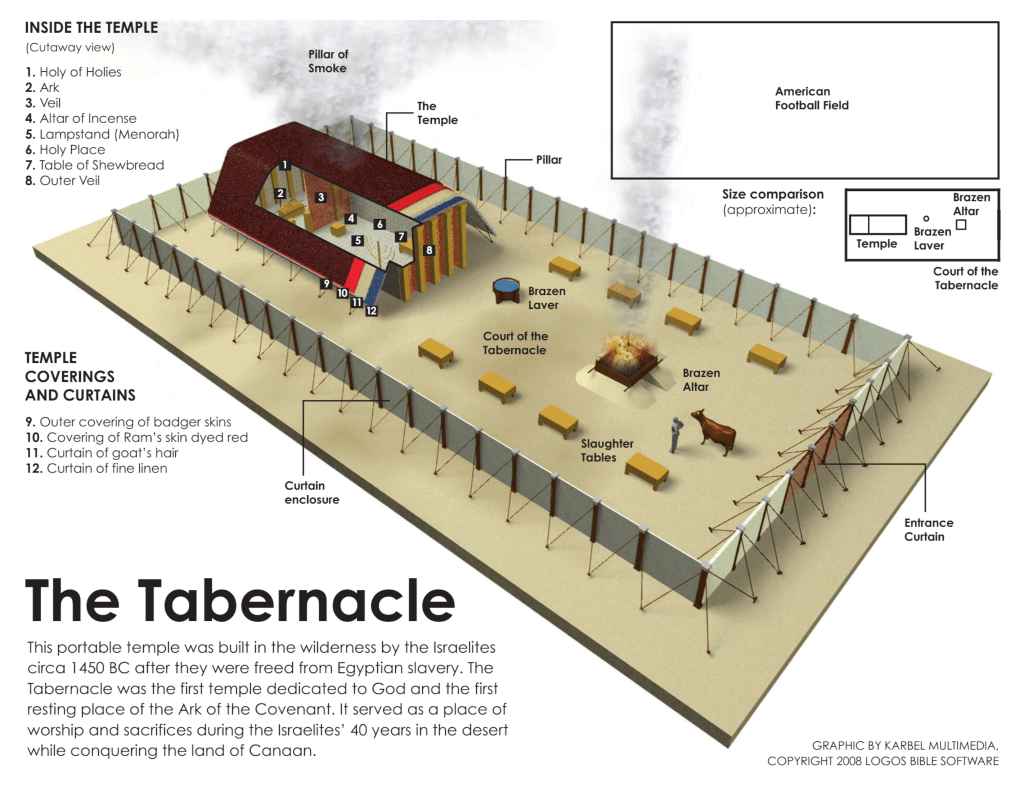
In this devotional I want to briefly explore how the OT Tabernacle (which was but a type of the heavenly tabernacle: Hebrews 8:5) can act as a guide or a visual aid to assist us in consecrating our homes to God.
God speaks to us through the prophet Malachi, in chapter 4 about family life:
5 “See, I will send the prophet Elijah to you before that great and dreadful day of the Lord comes. 6 He will turn the hearts of the parents to their children, and the hearts of the children to their parents; or else I will come and strike the land with total destruction.”
The 3rd Elijah message is a message about restoring families. Satan is wholly engaged in tearing families apart. He has created a culture that produces a fog upon the brain, a lack of desire for God and the things of God; an impatient spirit to wait upon the Lord, and among other things, rebellion to God’s revealed will and a sense of duty to obedienty surrender to His will.
Perhaps, in your own home you experience some of these symptoms. If you do, perhaps you also feel helpless and uncertain as how to wage war against this culture; to lead your family in the way everlasting; to prepare your family to be ready to meet Jesus when He comes the second time on the clouds of everlasting glory!
I believe we are in a spiritual battle and I also believe and hope that this very simple illustration might aid you in ordering your home, reclaiming your family for Christ, and waging effective war against Satan for the sake of your family’s eternal destiny.
Going back to Malachi 4, let us establish that the purpose of the godly family is to prepare to be ready to meet Jesus with shouts of “Glory! Glory! Glory!” The home is the mission field and we are to train up our children so that they will love God, be willingly obedient to Him, and joyfully share their experience and give the proclamation of the gospel in winsome tones and with Spirit-filled power!
Now, let’s turn to the illustration of the tabernacle.
The first thing we notice is that there is a courtyard surrounded by a wall. Our home is certainly in the world. Yet we are to put a protection, a wall between our home and the world. We are the priest of our home and we are to ensure that none other are ministering to our family, save those we have intentionally, carefully, and prayerfully chosen to come in, through the one and only gate: Jesus Christ. We must not let the world minister to our family. The world cannot be welcomed into our family. We must guard the avenue to the soul in our family circle.
Next, is the Altar of Burnt Offerings. John 3:16 says, “If we confess our sins, He is faithful and just to forgive us our sins…” No family, nor any person in it is perfect. Yet, we each need to come to the alter; come to the foot of the cross… Parents, you are the priests of your home. Bring your family with you daily to the foot of the cross. Here, gaze upon our Savior, meditate upon His sacrifice, contemplate His character, and here, receive healing and forgiveness of sins. Yes, this is a daily, private work for each of you individually. But, as priests, bring your family, morning and evening to the altar in family worships. The Altar may also be said to represent the way that we sacrifice for each other. Maybe we sacrifice that overtime or holiday pay time in order have quality time in the family. Or, maybe mom and dad have been planning a romantic weekend getaway, but at the last minute, it is clear that one of the children have a need for quality time with mom and dad; so perhaps the sacrifice is postponing the getaway for the sake of ministering to the hearts of your children. And, we teach our children to sacrifice for each other because of their love and devotion for each other. Also, we, as a family, make sacrifices in order to write into our budgets neighborhood “light” ministries.
John 3:16 continues, “…and to cleanse us from all unrighteousness, for His name’s sake.” The laver represents purity and cleanliness. Our own attempts at purity is just us smearing mud around.
I love to invite my kids to clean up the table and counters, to help us in our daily chores. But, often, their best attempts to clean is little more than them smearing the mess around! So it is with us and righteousness!
And, now that we have accepted Christ’s righteousness in place of our own, let us make our home clean and pure. We need to ensure that there are no defiling influences in our home. Also, just as the priests would come to the laver to wash their hands and feet before continuing, we also should prepare our selves and our home. We should keep our home neat and clean and well ordered. “Cleanliness, neatness, and order are indispensable to the proper management of the household…A neglect of cleanliness will induce disease…All the work we do that is necessary to be done, be it washing dishes, setting tables, waiting upon the sick, cooking, or washing, is of moral importance…” (Adventist Home 21, 22)
Inside the Holy Place there are three pieces of furniture. First, the Table of Shewbread.
The shewbread, also called the Bread of the Presence, was a representation that Christ is always present with us. He is the Bread of Life and we are to live in/with Him. Also, in the 12 pieces of bread Christ is here represented as the Head of the church. In this allegory, we could say that Christ is the head of the home church, or of the family. We are to be reminded that we live in the presence of God, where He promises to never leave or forsake us. His continual presence in our home affects the mood and atmosphere of our home.
“God would have our families symbols of the family in heaven. Let parents and children bear this in mind every day, relating themselves to one another as members of the family of God. Then their lives will be of such a character as to give to the world an object lesson of what families who love God and keep His commandments may be. Christ will be glorified; His peace and grace and love will pervade the family circle like a precious perfume.” AH 17.2
Next is the Altar of Incense which represents prayers. Prayer is to have a central role in our family life. Not only should we have our mealtime and bedtime prayers, but we should make prayer a frequent activity; teaching our children to turn to God as to a friend: pouring out their hearts in their joy and in their miseries; confessing and forsaking sin, interceeding for others, and surrendering their wills to God. Teach them to pray using the acronym P.R.A.Y (Praise and thanksgiving, Repent (search for and confess and turn from sin, Ask for other people or personal/family needs, and Yield our wills to His, which includes allowing God to add to our experience or take away from our experience those things that God deems most valuable in each moment to prepare us to love, serve, and obey Him in constancy.) We can teach our children to seek the Holy Spirit in our prayer life by modeling seeking Him in prayer. As we begin each prayer we ask the Holy Spirit to bring to our minds what we should pray for and then have a moment of silence waiting for Him to teach us.
Which brings us to the 7 branch lampstand. Here we are presented with the oil of the Holy Spirit who teaches us, converts, convicts us, empowers us, comforts us, and transforms us. He is the gardener who prepares our hearts to receive the Word of God and once received, He then is the power which causes Christ (the Light of the World) to shine out to lighten our world. No heavenly home is complete without a plan shine Christ’s light to their sphere of influence (neighbors, coworkers, and others of divine appointment.) Home is not just a training ground, but is also where the most potent missionary work is done from.
Inside the Most Holy Place was the Ark of the Covenant. On top of the Ark is the Mercy Seat. It is the place where Christ sits in Judgment. His judgment is mixed with mercy, forgiveness, and grace. On the outside of the Ark are found the Law, the Testimonies, the Statutes, and the Judgments. So, in our homes we need to have law and order and a clear diliniation of consequences. Yet, we need to use discernment in judging the circumstances and while we are to be firm and consistent, we are to be gracious and merciful as we mediate the conflicts that arise in our home.
Inside the Ark there are three items.
The first is the 2 tablets of the Commandments. The rules of our home are to be ordered by God our Creator. The world may have a lot of good suggestions. But, we are to examine them according to the precepts of the Word of God to ensure that God is the ruler of our home.
The second is the Rod of Aaron which budded. This has a two-fold meaning for our homes. First, the budding rod reminds us that God has appointed leading ministers. Our children are to respect the authority of their parents. They are not to rebel against the authority of the parent. Parents receive their authority from God and they aren’t to relinquish it just because a persuasive and pervasive world culture presses them to do so; presses, often, through our children. But, the rod reminds us to Yield our wills to God and to not rebel against Him.
The Rod also reminds us that God disciplines us so that He doens’t have to judge against us. Hebrews 12:6 says, “because the Lord disciplines the one he loves,
and he chastens everyone he accepts as his son.” Now, while I believe in a softer touch, I try to not raise my voice or use my hands in discipline, the Greek text uses the word ‘scourge’ (which means to beat with a whip) along with the word chasten (which means to guide and correct). Therefore, we should understand that we are to be intentional about guiding our children and it may be that at times of extreme circumstances, to save their lives, we may have to use some sort of carefully measured and strategically placed physical application of discipline.
As a simple illustration of this, your two-year old is learning to walk and run. It is an exciting time for him/her. But, she doesn’t yet know the dangers of running out into the road, or through the parking lot. Because this is a matter of life and death, and because her pre-frontal cortex is too underdeveloped to reason with her, you may need to dispassionately apply a spanking to every infraction of running into the road so she can experience an immediate consequence, which is also much less than should a car give her a spanking. In this case, you use the rod to modify her behavior immediately so as to preserver her life until such time as she can be reasoned with and learn why she should cautiously approach pedestrian crossings, looking both ways, first. The budding rod of Aaron reminds us that discipline in the home is vital.
The third item is the bowl of manna that never goes bad. The bowl of manna reminds us of God’s providence. Jesus said that our Heavenly Father cares for the birds and clothes the flowers. Therefore, we should trust Him to provide for us. The bowl also reminds us of our daily need to spend quality time with Jesus first thing, before the cares and worries and obligations of this world presses in upon us. It also represents the Heavenly diet. God provided Israel with a very simple food while in wilderness so as to train not only their dependence upon Him, but to also retrain their tastebuds and heal their bodies. So, we are given direction to return to an Edenic diet as an essential part of preparing us to be ready to meet Jesus when He returns!
Jesus has given us guidance so that we can shape our families for eternity. The tabernacle as an allegory of the home circle is but one way to look at and understand His instruction. I hope it is helpful to you as you seek to shake off the clutches of this world from your family and to ensure Christ’s place as the head of your home.
Preparing to meet you in Heaven!
Tom Nicholas


Leave a comment